- Early Corn Earworm Activity
- Pesticide Credit Opportunity
- Northeast Ag Expo
- Drought Update
Field Crops July Newsletter
(Updated: July 10, 2026, 12:06 p.m.)

Contents:
Early Corn Earworm Activity
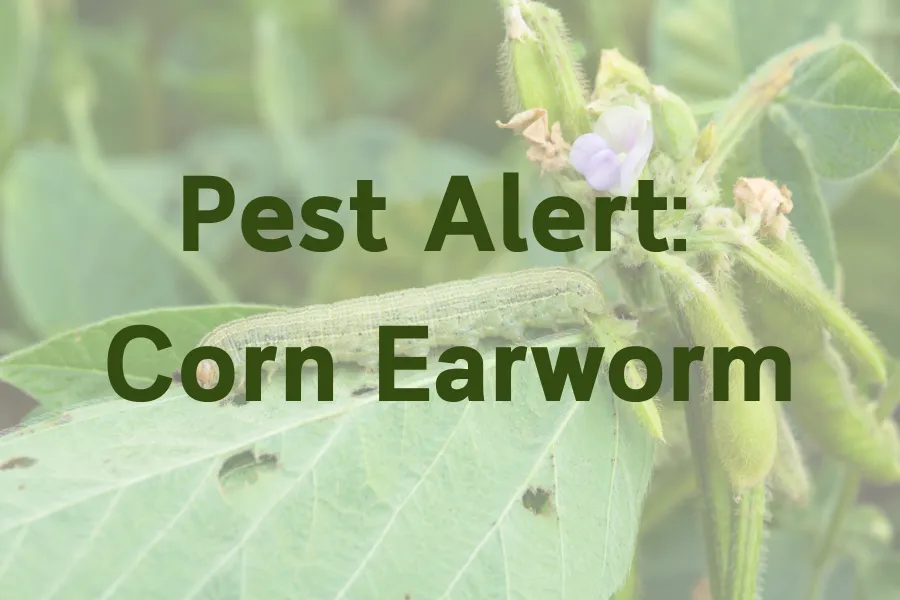
Corn earworm activity has been reported in soybean fields across northeastern North Carolina, including Pasquotank County. These reports are much earlier than we typically expect, as corn earworms usually become a concern later in July. Dr. Dominic Reisig, NC State Extension Specialist, recently published an article on corn earworms in flowering soybeans. These are the highlights:
- Early corn earworms don't always mean it's time to spray. Corn earworms are showing up earlier than usual this season, likely due to moths migrating from the south. While this can lead to higher populations in early-planted soybeans, soybeans at the R1-R2 (flowering) stages can usually tolerate flower feeding without yield loss—especially if the crop is not under stress.
- Scout carefully once pods begin to develop. The risk of yield loss increases when soybeans reach the R3 (beginning pod) stage because earworms begin feeding on pods rather than flowers. Continue scouting fields and monitor the NC State light trap network, as corn earworm pressure is expected to increase later in the season as moths emerge from corn fields. You can utilize the NC State Extension Corn Earworm Economic Threshold Calculator.
- Choose insecticides wisely. If treatment is needed, use products that effectively target corn earworm while preserving beneficial insects. Avoid broad-spectrum insecticides like acephate and pyrethroids unless another pest requires them, as they can flare secondary pests such as soybean loopers and spider mites. The article also advises not using Besiege, Elevest, or Vantacor in soybeans.
Important note- NC State has also recently updated the defoliation thresholds for full-season soybeans in reproductive development. The updated guidelines are listed below:
- Vegetative Growth Stages: 30% of the canopy- for both full-season soybean (planted prior to June 1) and double-cropped soybean (planted after May 31)
- After bloom: 25% of the canopy- full-season soybean (planted prior to June 1).
- After bloom: 15% of the canopy- double-cropped soybean (planted after May 31)
Pesticide Credit Opportunity
The Pasquotank Extension office will be holding an all credit pesticide class in August, where Private Applicators can gain two hours of X and V credits along with the opportunity to watch the new required C&T Training. More details on the date and time will be shared soon.
Northeast Ag Expo
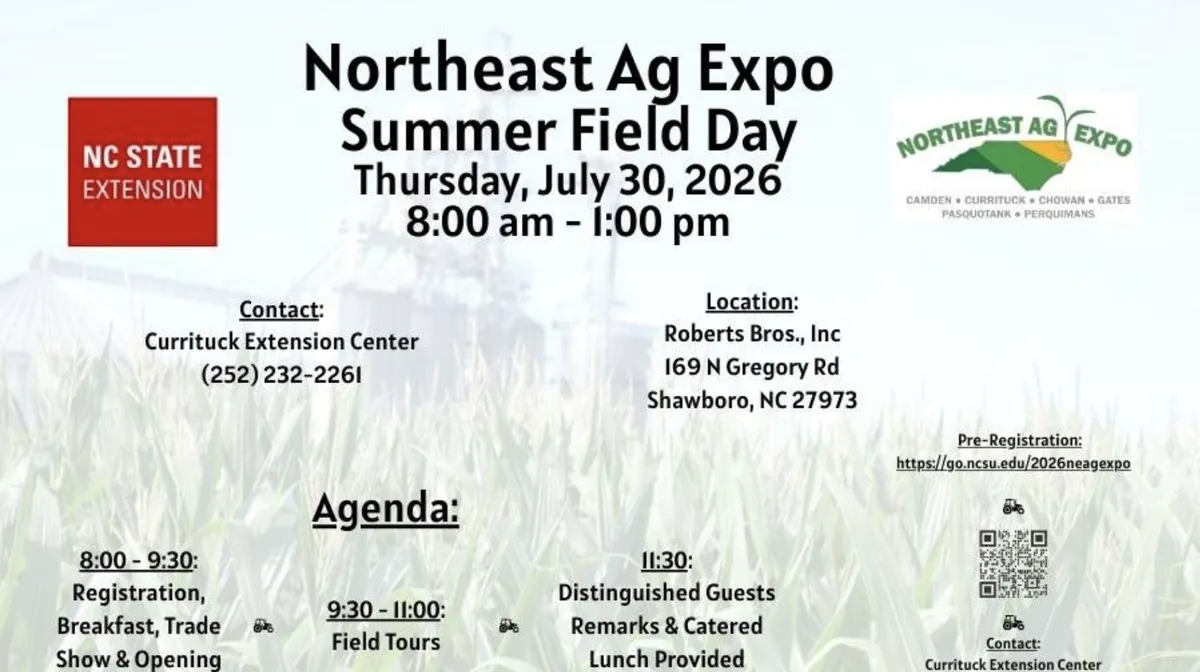
The Northeast Ag Expo will be holding its annual summer field day on July 30th, 2026. The trade show and breakfast start at 8:00AM. Two hours of N, O, D, & X credits will be offered. Register using the QR code or this link.
Drought Update
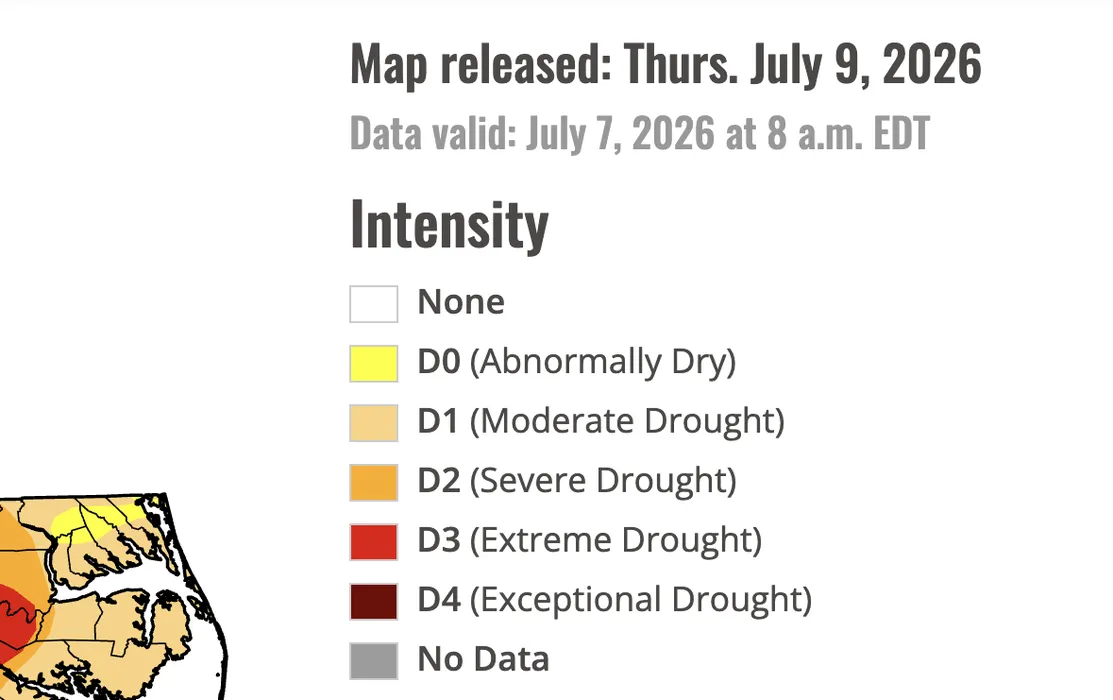
While we have had significant rainfall events in recent weeks, Pasquotank county is still experiencing drought. The northern region of the county is classified as abnormally dry, and the southern region is classified as moderate drought. Here are some Agricultural Drought Resources.
Written By